WhatsApp: +86 15302103551
E-mail:
info@hopexformingline.com
Tel:+86 022 86728681
Fax:+86 022 86728681

Develivery time:25-35 days
Payment:30% T/T deposit,70% balance before shipping
Warranty :2 years for machinery warranty
WhatsApp: 008615302103551
E-mail: info@hopexformingline.com
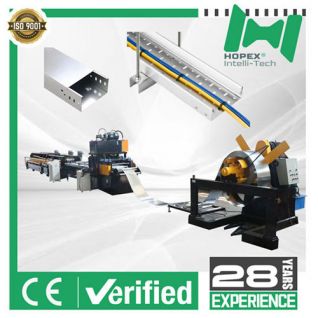
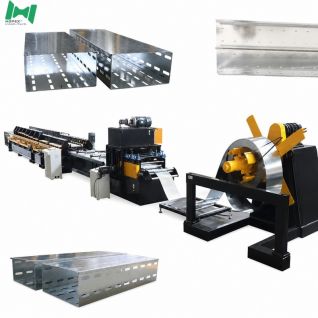
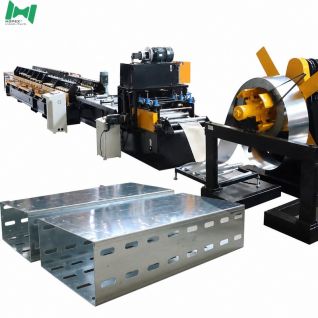
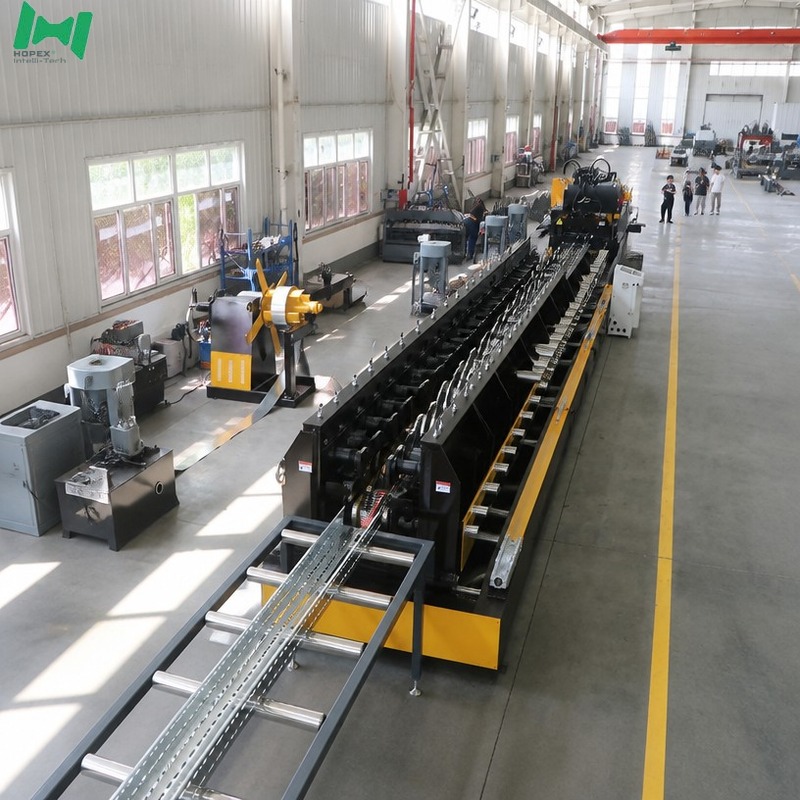
HOPEX-Cable Tray Forming
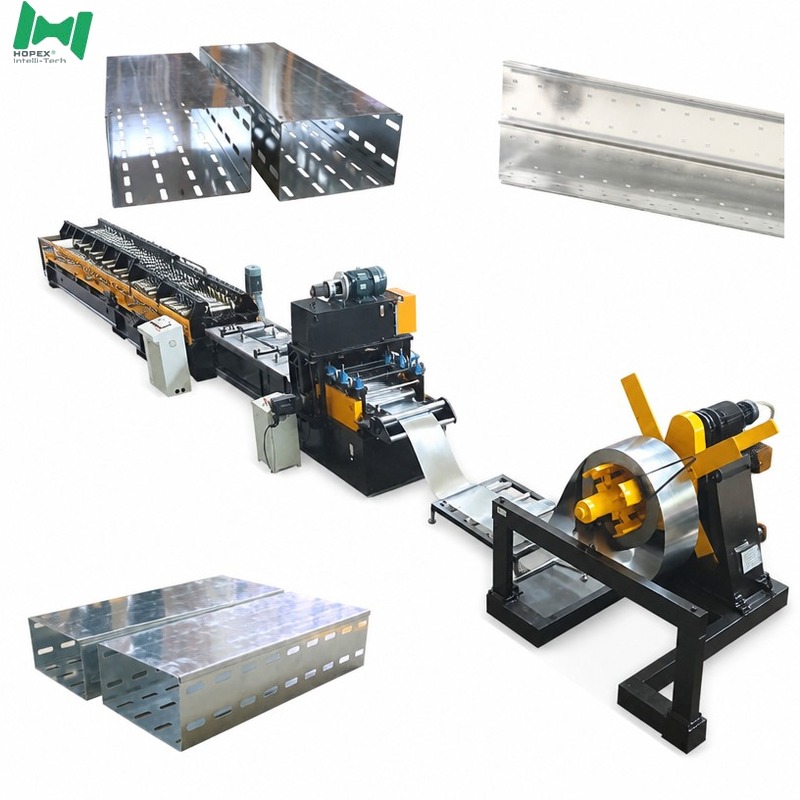
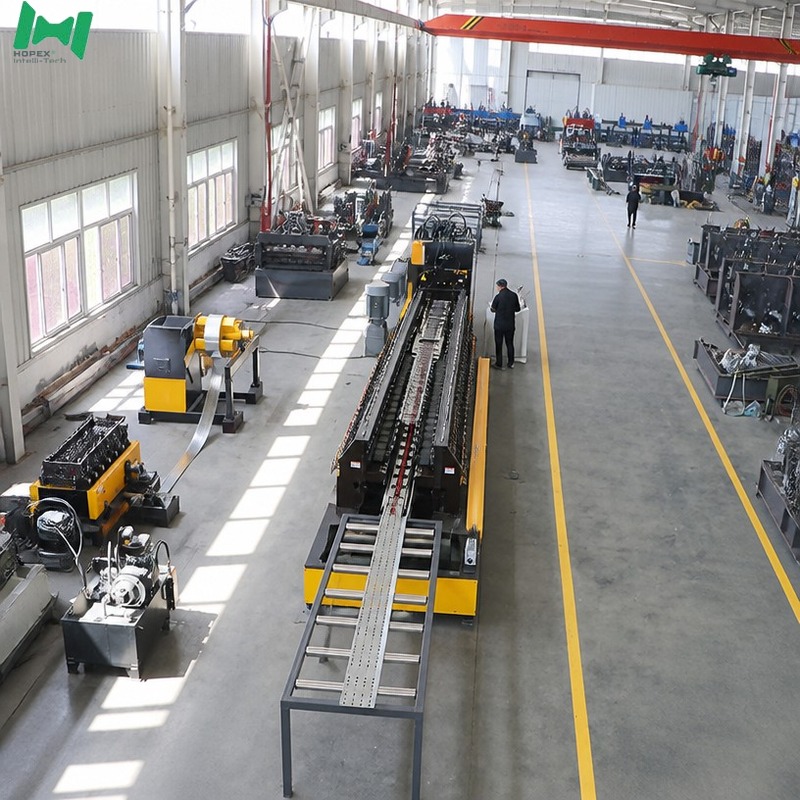
Thin gauge is less forgiving than heavy gauge. At 0.8 – 1.5 mm the strip has little stiffness of its own, so every source of variation in the line transfers straight into the tray. This cable tray forming machine is built around that problem.
Strip thickness is held to ±0.03 mm. That figure is only meaningful if the line does not introduce its own variation on top of it.
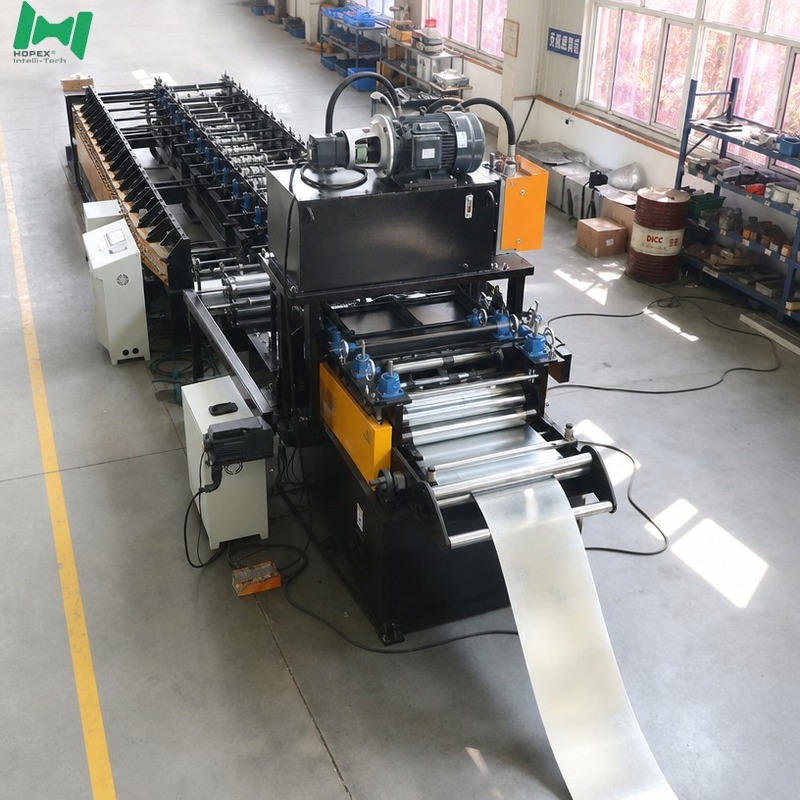
Coil memory is the largest single source. A 12-roller leveller with lifter linkage system is fitted ahead of the tooling, and its lifter linkage system lets the operator correct as coil condition changes through the roll.
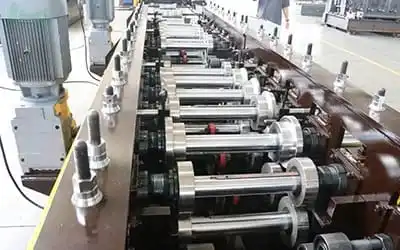
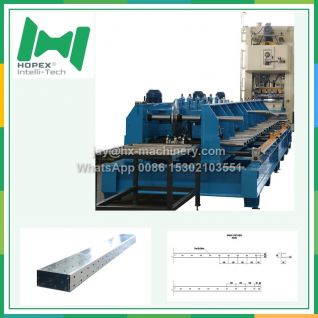
Deflection under roll separating force shows up as a width that changes along the length. The mill uses a 70 mm solid shaft in 45# steel, tempered.
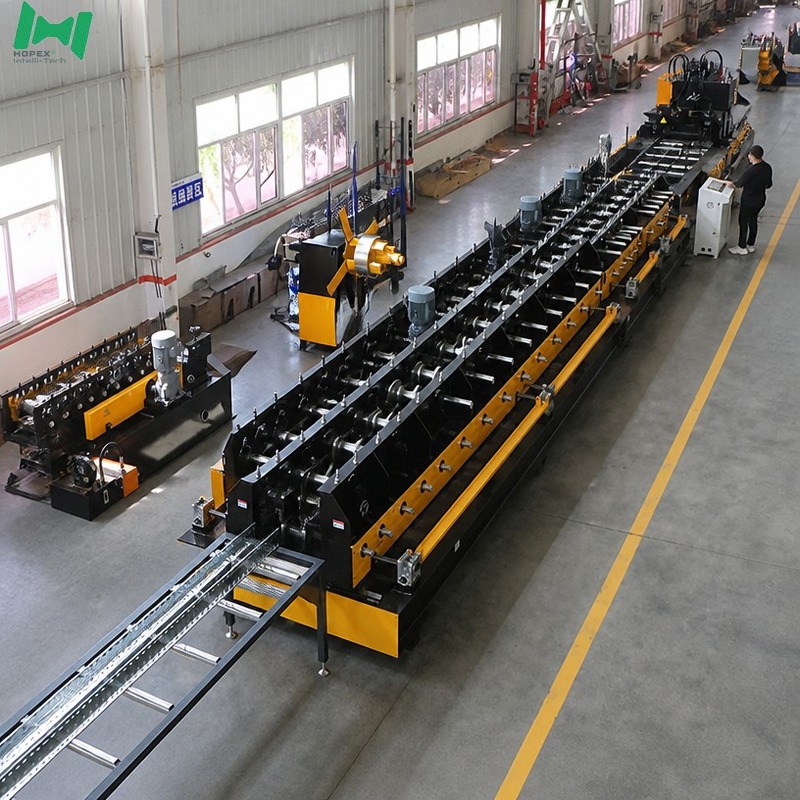
Thin material buckles at the flange if it is bent too hard in one step. Deformation is spread across 26 rows of rollers so each increment stays small.
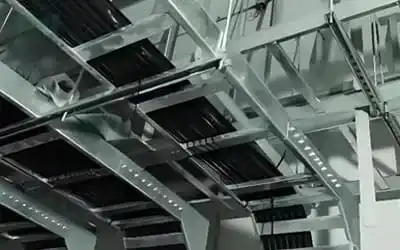
Rollers are 45# steel, quenched and hard chromed. Hard chroming resists the abrasion of galvanized and zinc-aluminium-magnesium strip, so the profile does not drift over a production run.
Punch pitch depends on speed stability. Three 7.5 KW main motors drive the mill, holding 8 – 16 m/min without dropping when a heavier gauge enters.
| Variation source | Control fitted |
|---|---|
| Incoming coil set | 12-roller leveller with lifter linkage system |
| Shaft deflection | 70 mm solid shaft in 45# steel, tempered |
| Flange buckling | 26 forming rows |
| Tooling wear | 45# steel, quenched and hard chromed |
| Speed fluctuation | 7.5 KW × 3 main motors |
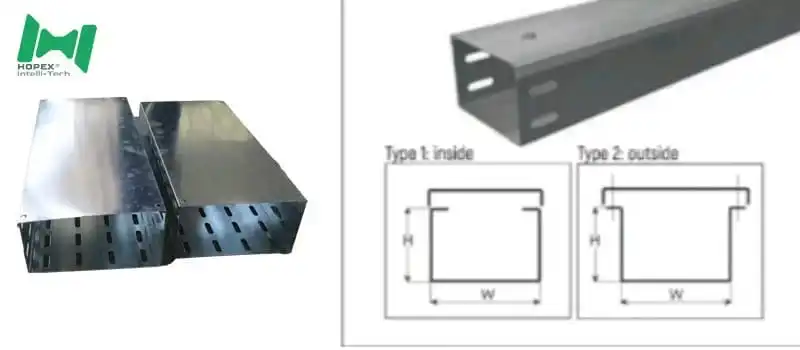
| Item | Parameter |
|---|---|
| Strip width | 200 – 650 mm |
| Strip thickness | 0.8 – 1.5 mm (±0.03 mm) |
| Production speed | 8 – 16 m/min |
| Workpiece length | 2000 – 3000 mm |
| Footprint | 30 × 2.5 × 2.2 m |
| Weight | 50000 kg |
| Installed capacity | about 50 KW |
| Main motor | 7.5 KW × 3 |
| Supply | 400 V ±5%, 60 Hz |
| Control | PLC, Taiwan Delta or Siemens |
| Place of origin | Tianjin, China |
Q1. What thickness tolerance applies?
±0.03 mm on strip thickness of 0.8 – 1.5 mm.
Q2. What is the biggest cause of tray distortion?
Residual coil set. It is removed at the 12-roller leveller with lifter linkage system before the strip reaches any tooling.
Q3. Why 26 forming rows for thin material?
Thin strip buckles at the flange if bent too hard in one step, so the bend is spread across 26 rows.
Q4. What shaft is used?
70 mm solid shaft in 45# steel, tempered.
Q5. Does speed affect hole pitch?
It would if speed fluctuated. 7.5 KW × 3 main motors hold 8 – 16 m/min under load.
Q6. Is the machine certified?
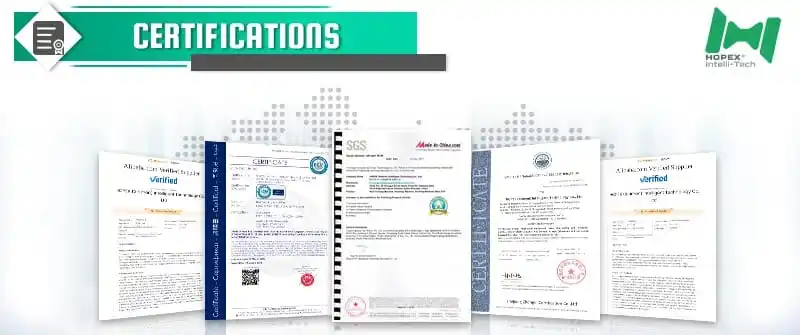
CE certification, with machinery test report and video outgoing-inspection.