WhatsApp: +86 15302103551
E-mail:
info@hopexformingline.com
Tel:+86 022 86728681
Fax:+86 022 86728681

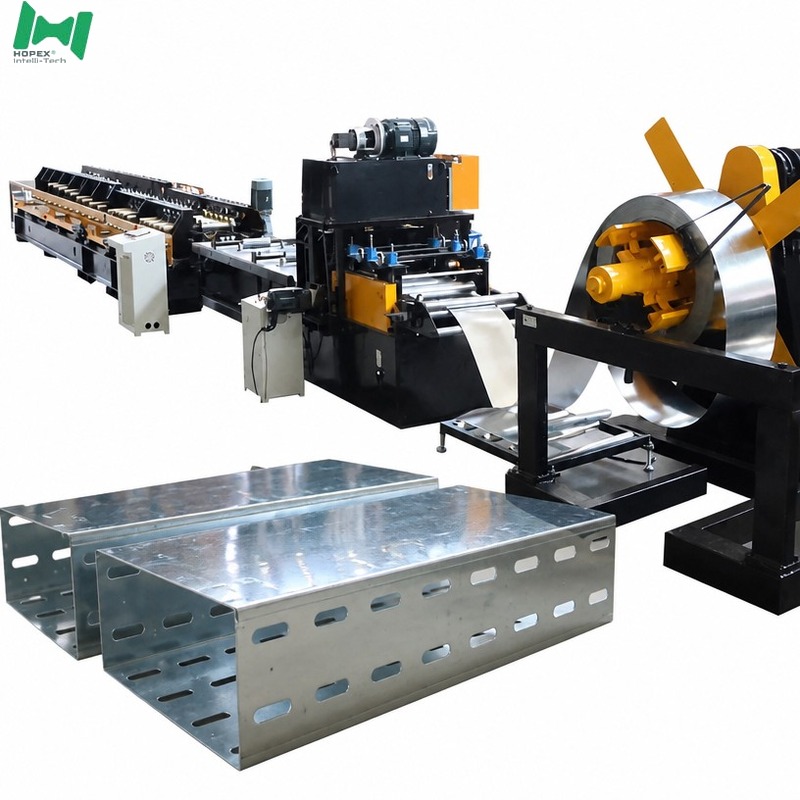
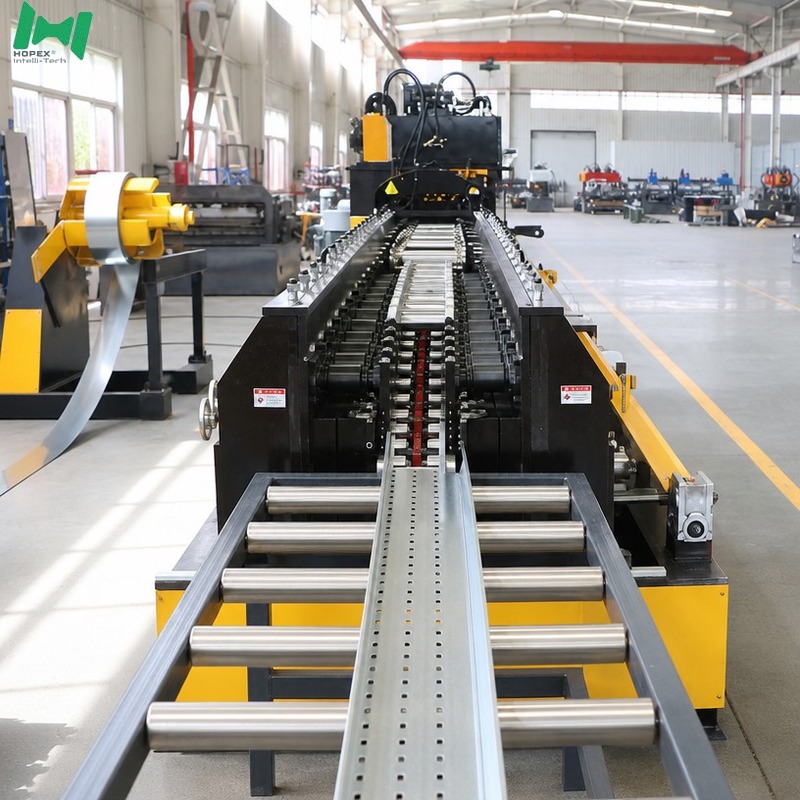
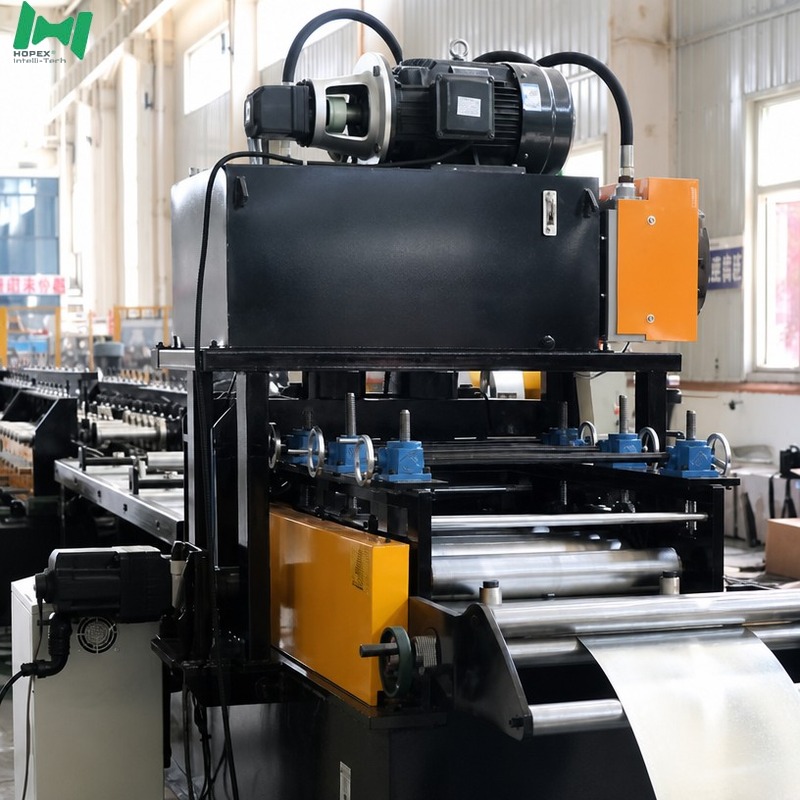
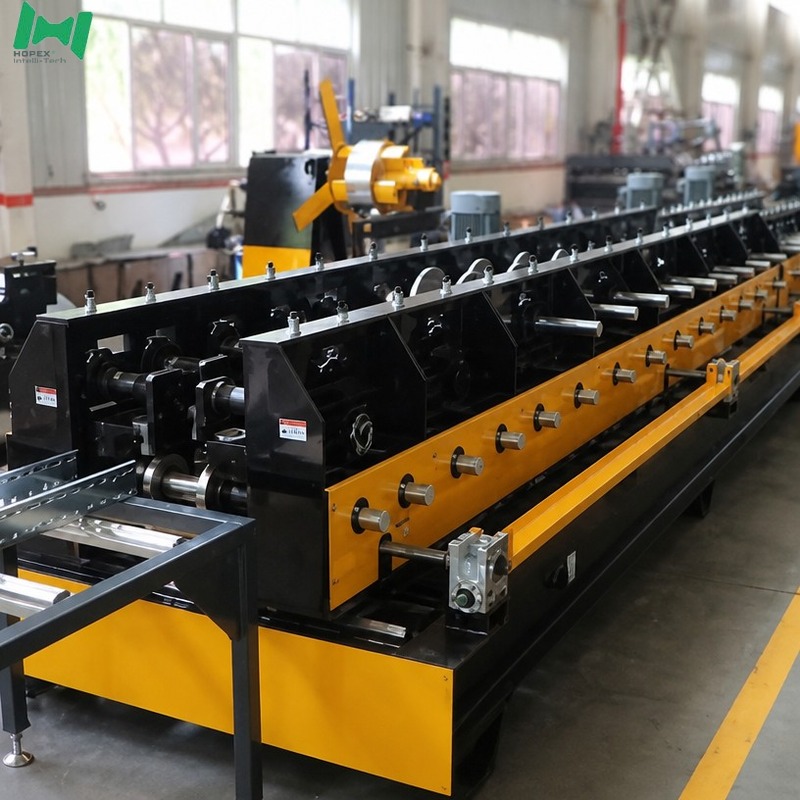
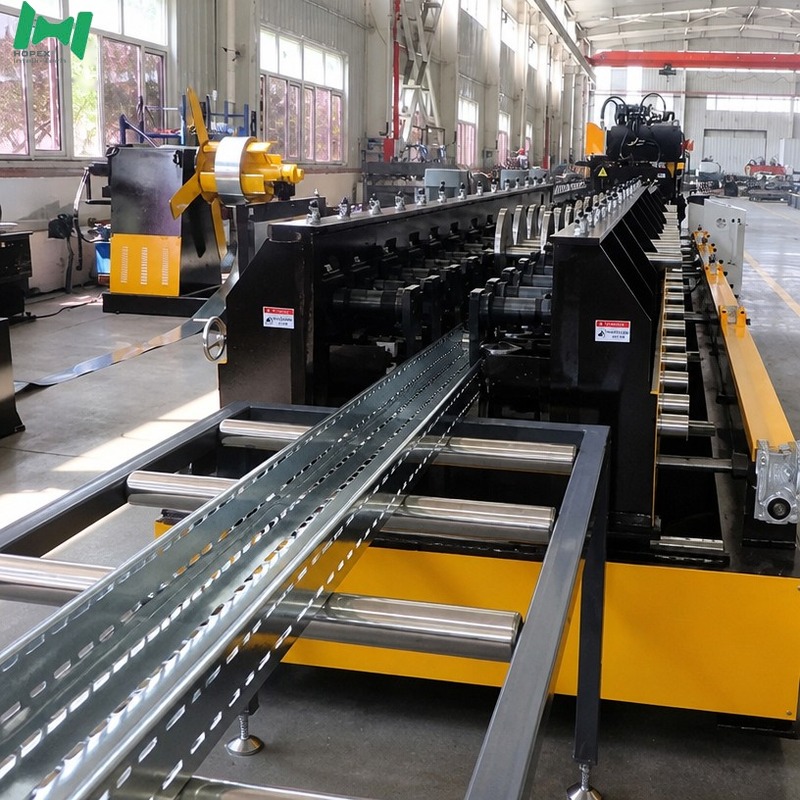
HOPEX-Perforated Cable Tray Line
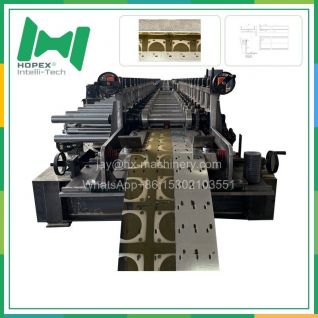
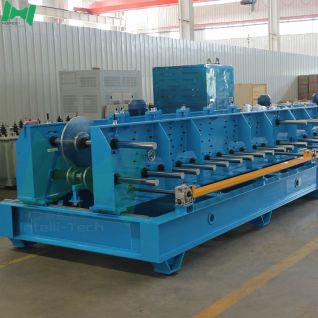
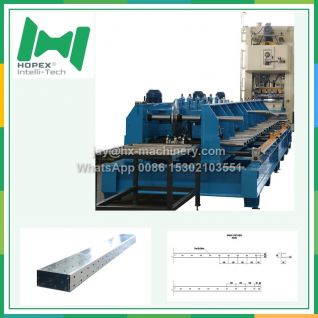
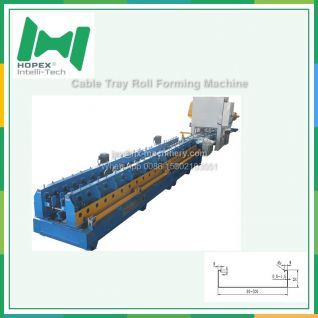
Perforation is what separates a cable tray from a plain channel. It also decides the throughput of the whole line, because punching is usually the slowest station. This perforated cable tray roll forming line is arranged around that constraint.
| Feature | Detail |
|---|---|
| Punching unit | two-position punching machine |
| Z-hook punching | Included |
| Marking | Included in the same unit |
| Large-span Z-hook holes | Optional, at the levelling section |
| Pallet holes | Optional, at the levelling section |
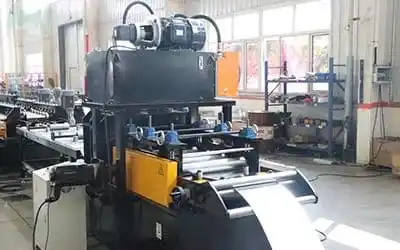
Punching a flat strip is easier to support and locate than punching a formed tray. The hole edge is cleaner and position control is better, which is why the punching section sits upstream of the forming mill.
Production speed is 8 – 16 m/min, and that figure already includes punching of connecting holes. Actual output depends on product length and the number of holes; punching of pallet holes is excluded from the stated rate.
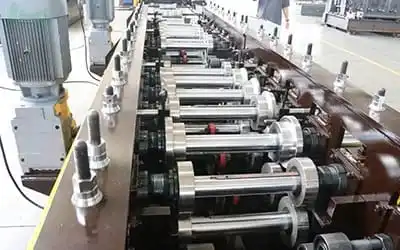
A two-position punching machine allows two hole patterns to be produced without a second setup. For a fabricator supplying trays with both Z-hook and marking requirements, this removes an entire handling operation.
| Item | Parameter |
|---|---|
| Rolling strip width | 200 – 650 mm |
| Rolling strip thickness | 0.8 – 1.5 mm (±0.03 mm) |
| Online punching and production speed | 8 – 16 m/min |
| Roller rows | 26 |
| Workpiece length | 2000 – 3000 mm |
| Decoiler | electric decoiler, 10 t maximum loading |
| Levelling | 12-roller leveller with lifter linkage system |
| Punching | two-position punching machine |
| Footprint | 30 × 2.5 × 2.2 m |
| Weight | 50000 kg |
| Installed capacity | about 50 KW |
| Supply | 400 V ±5%, 60 Hz |
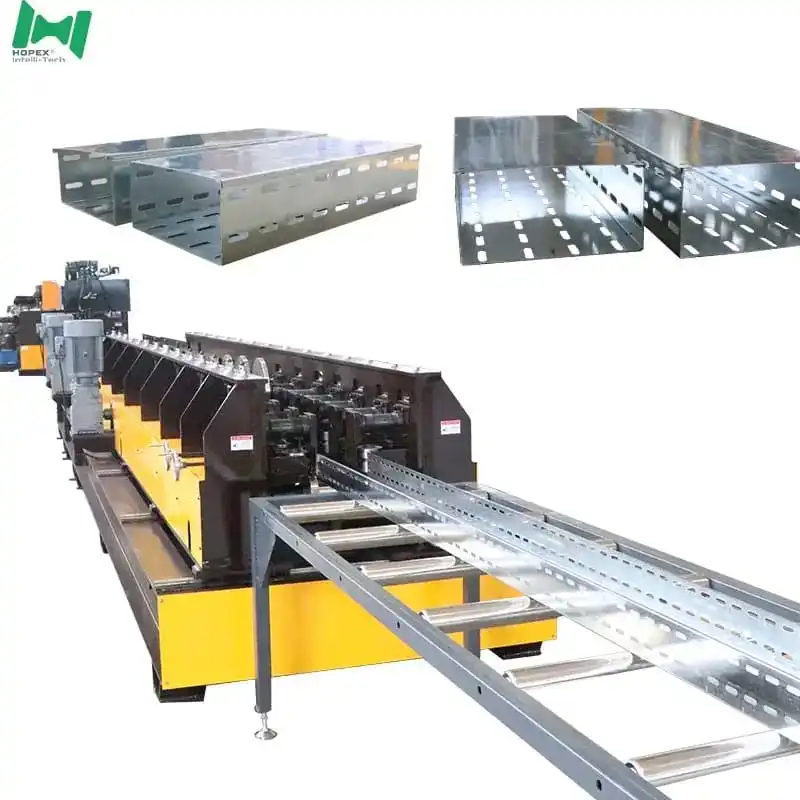
| Item | Detail |
|---|---|
| Shaft | 70 mm solid shaft, 45# steel, tempered |
| Main motor | 7.5 KW × 3 |
| Strip thickness tolerance | ±0.03 mm |
| Place of origin | Tianjin, China |
| Warranty | 2 years |
| Free maintenance | 18 months, parts and freight included |
Q1. What hole patterns can the line punch?
Z-hook punching and marking as standard, with large-span Z-hook holes and pallet holes available as options at the levelling section.
Q2. Is the stated speed with or without punching?
8 – 16 m/min already includes punching of connecting holes. Pallet hole punching is excluded from that figure.
Q3. Why is punching placed before the forming mill?
A flat strip is easier to support and locate, giving better hole position and a cleaner edge than punching a formed tray.
Q4. Can two different hole patterns run in one pass?
Yes, that is what the two-position punching machine provides.
Q5. What tray widths are supported?
200 – 650 mm.
Q6. What length can be produced?
2000 – 3000 mm per workpiece.