WhatsApp: +86 15302103551
E-mail:
info@hopexformingline.com
Tel:+86 022 86728681
Fax:+86 022 86728681

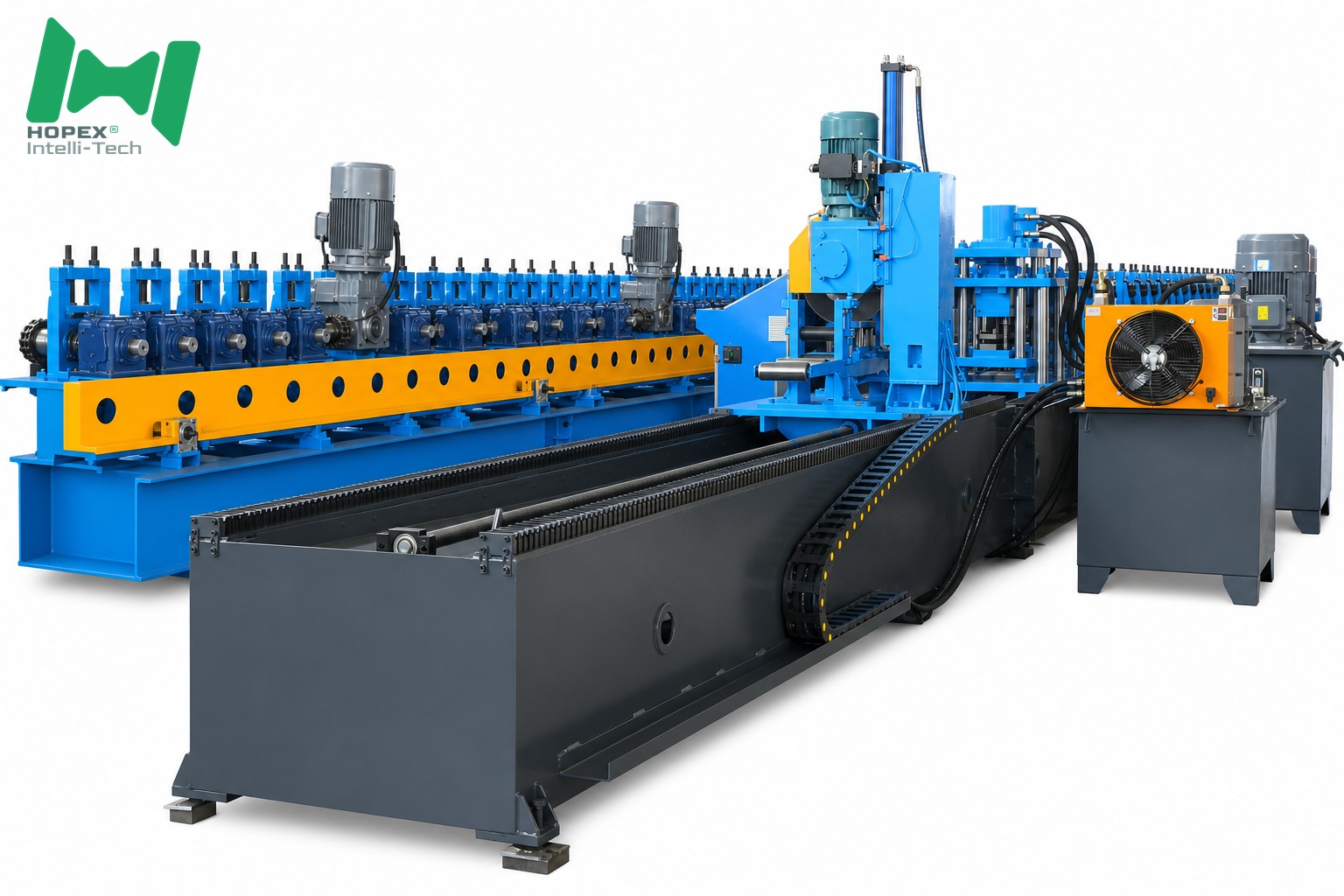
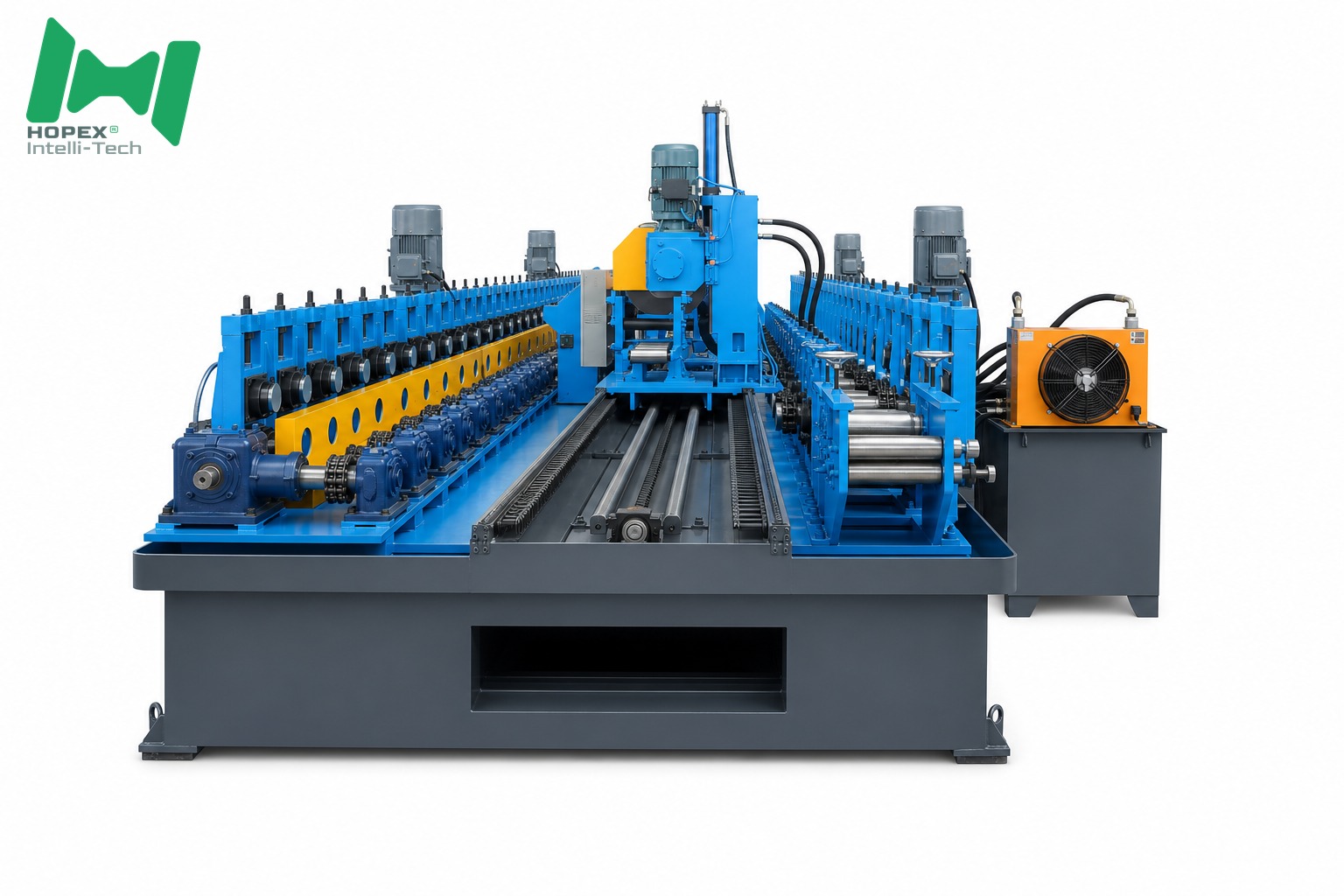
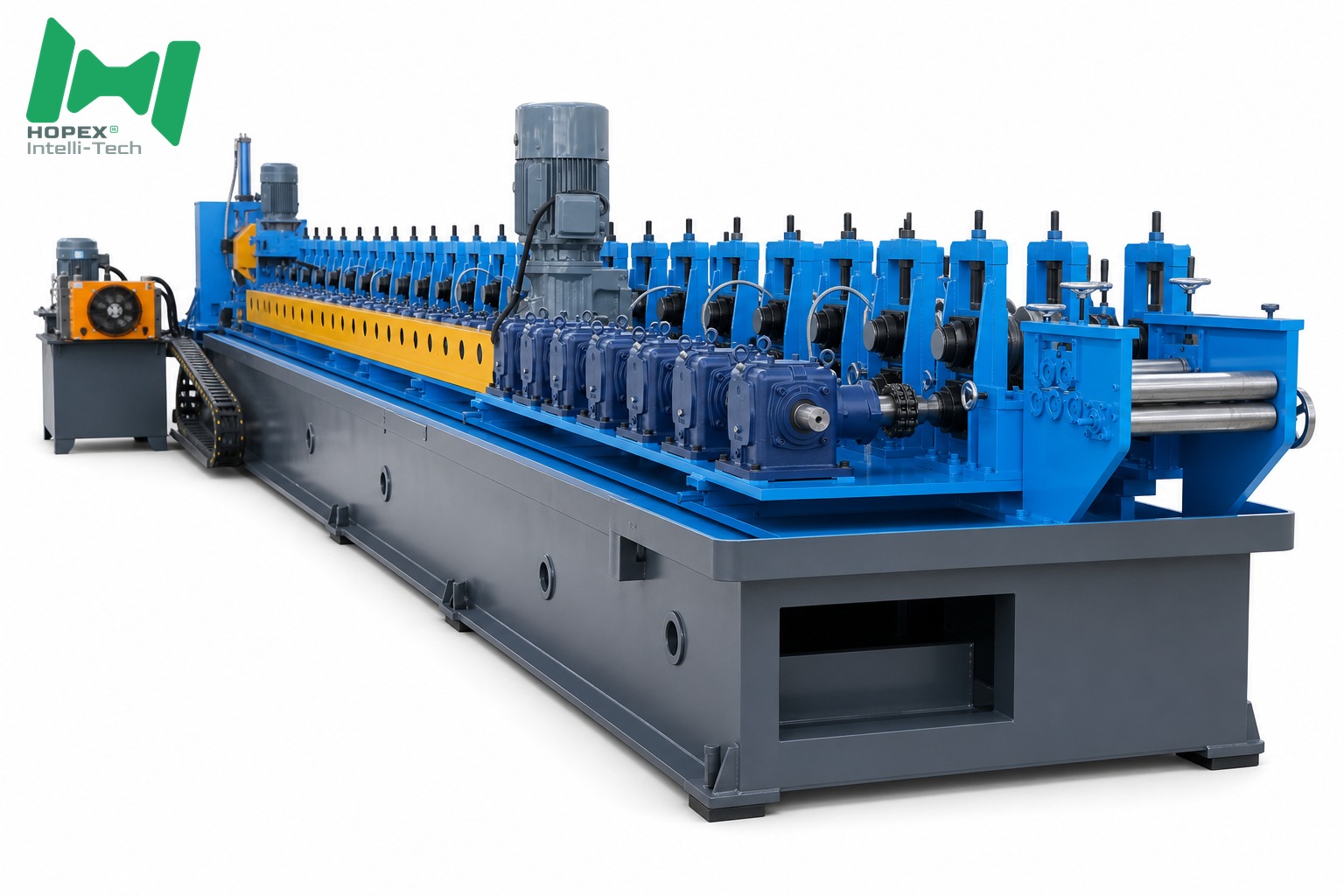
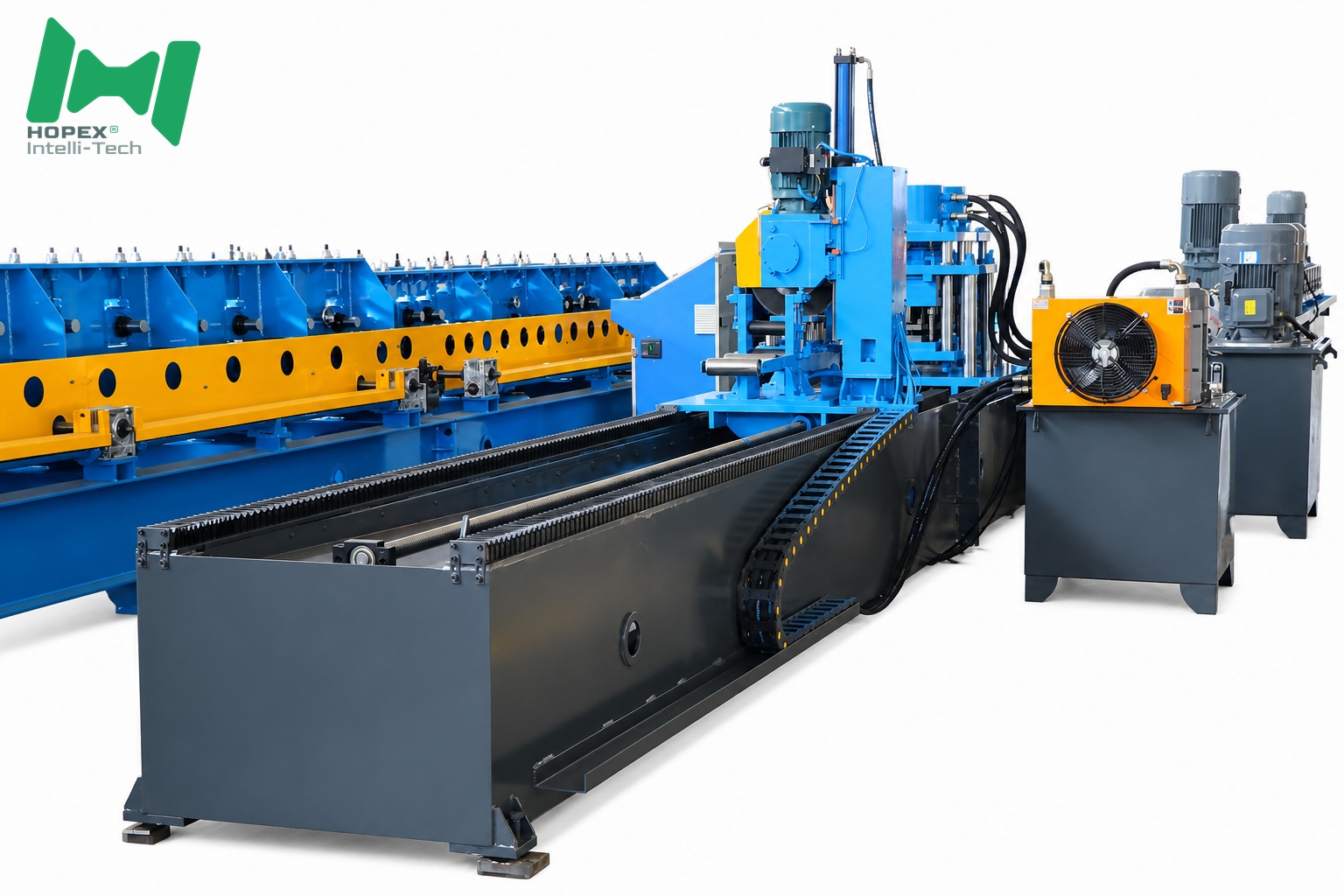
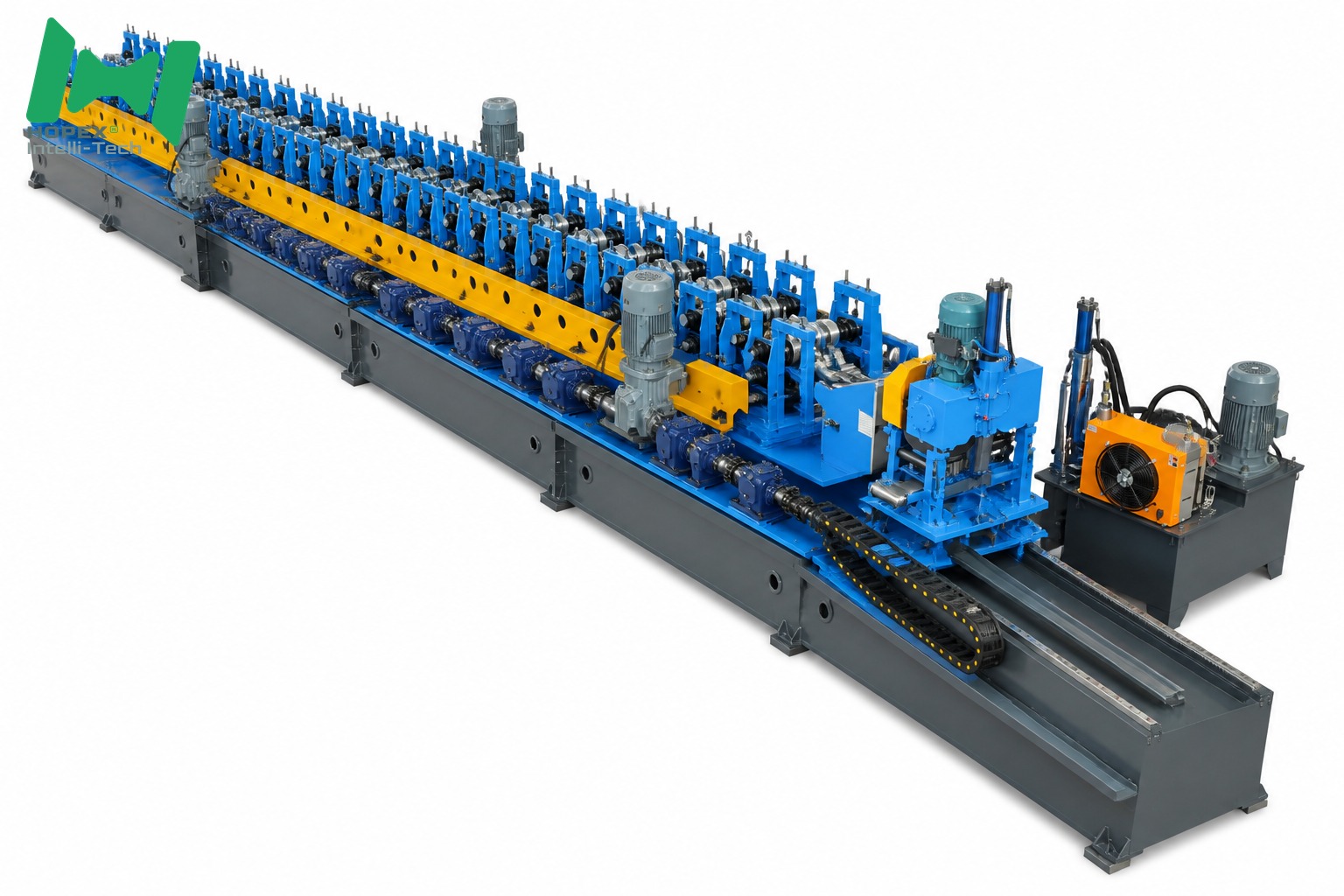
HOPEX-Seismic Solar Bracket
Seismic bracing behaves differently from static support. Under ground motion the channel is loaded in tension, compression and reversal within the same event, so the section must hold its shape rather than simply carry weight. This seismic solar bracket roll forming machine is specified against that duty.
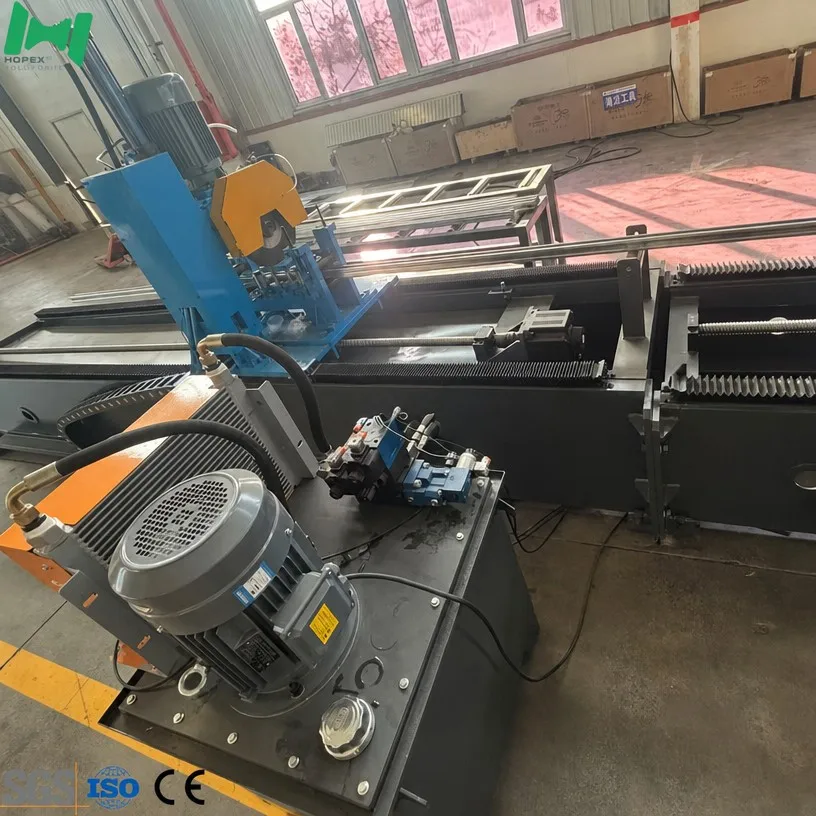
The line forms four channel widths — 135 mm, 157 mm, 177 mm and 197 mm — from material 1.5 – 2.5 mm thick, at 10 – 15 m/min.
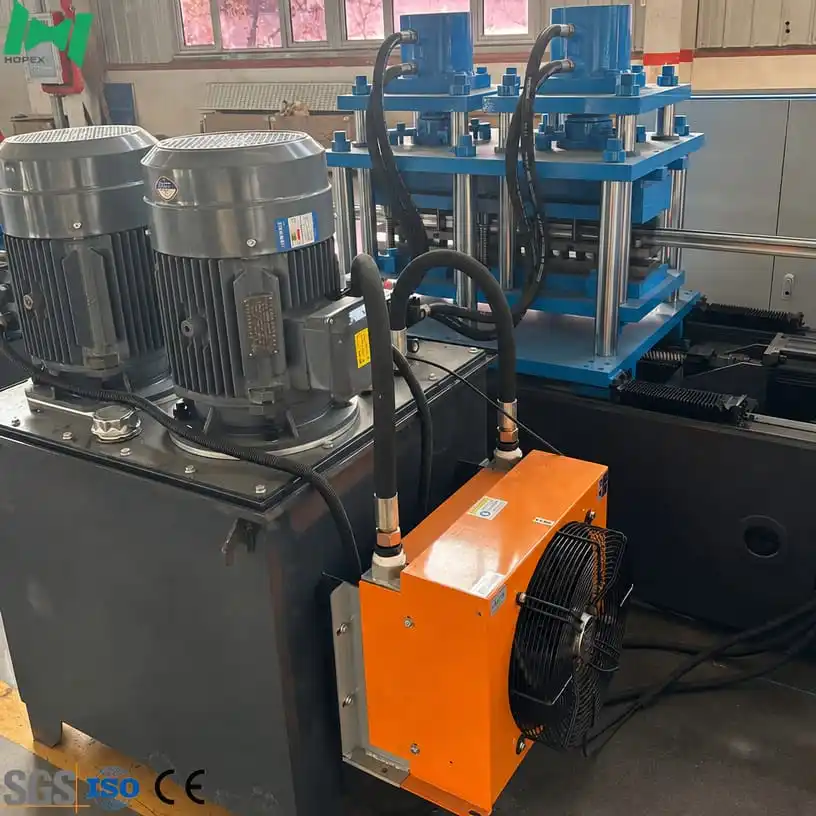
A brace that is adequate in tension can buckle in compression. Consistent web thickness and square corners across the whole length are therefore not cosmetic requirements; they determine the buckling capacity of the finished brace.
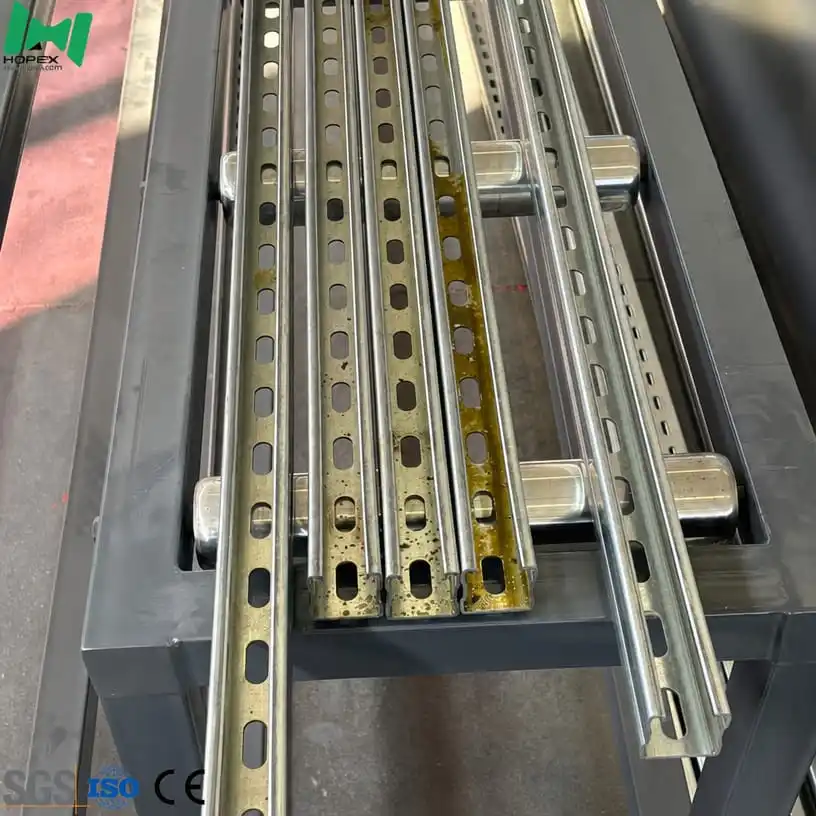
Seismic assemblies rely on bolted connections that must not elongate under cyclic load. Hole position and hole edge quality are produced in line rather than drilled on site.
A seismic bracing system is only as good as its weakest member. Every brace in the building has to match the engineered drawing, which places the burden on the forming line rather than on inspection.
| Seismic demand | Machine response |
|---|---|
| Buckling capacity under reversal | Cr12 tooling holding section geometry through the pass sequence |
| Connection integrity | In-line punching, holes formed before the section closes |
| Project-wide repeatability | gearbox and arch frame drive delivering constant speed at 10 – 15 m/min |
| Coating survival at bends | Progressive forming across the full station sequence |
| Cut edge quality | Cr12MoV blade material |
| Feeding width | Typical use |
|---|---|
| 135 mm | Light seismic bracing and secondary supports |
| 157 mm | Standard solar mounting rails |
| 177 mm | Heavier bracing runs and longer spans |
| 197 mm | Primary structural members and main braces |
All four widths run on the same mill, so a project needing mixed sections does not need separate equipment.
| Item | Parameter |
|---|---|
| Feeding width | 135 / 157 / 177 / 197 mm |
| Raw material thickness | 1.5 – 2.5 mm |
| Roll forming speed | 10 – 15 m/min |
| Drive model | Gearbox and arch frame |
| Roller material | Cr12 |
| Roller shaft material | 40Cr |
| Blade material | Cr12MoV |
| Total power | 69 KW |
| Voltage | 380 V |
| Machine weight | 20000 kg |
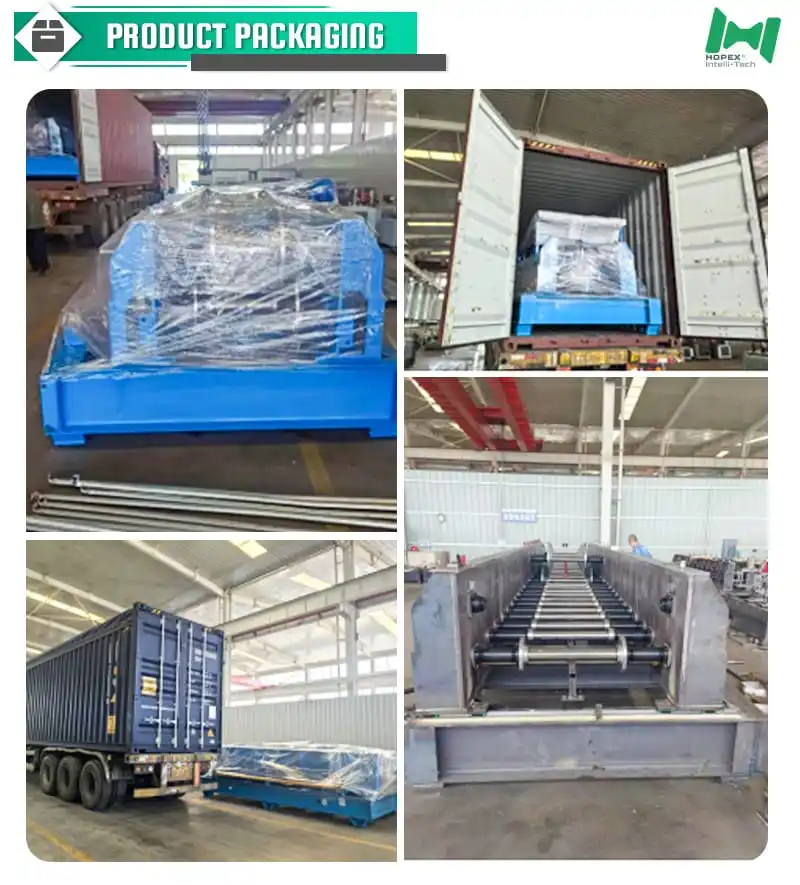
| Package size | 2600 × 300 × 200 cm |
| Place of origin | Tianjin, China |
| Warranty | 2 years |

| Quantity | Lead time |
|---|---|
| 1 set | 75 days |
| 2 – 5 sets | 90 days |
| Above 5 sets | To be negotiated with our engineers |
Q1. Why does seismic bracing need tighter section control than static support?
Because the brace sees load reversal. Section geometry governs buckling capacity in compression, so variation that would be harmless in a static support becomes a structural weakness.
Q2. Which widths can this machine produce?
135 mm, 157 mm, 177 mm and 197 mm, all on the same mill.
Q3. What thickness range applies?
1.5 – 2.5 mm raw material.
Q4. Are holes punched in line?
Yes, punching is done before the section closes, which controls hole position and edge quality.
Q5. What is the forming speed?
10 – 15 m/min.
Q6. What power supply is required?
69 KW total connected load at 380 V.