WhatsApp: +86 15302103551
E-mail:
info@hopexformingline.com
Tel:+86 022 86728681
Fax:+86 022 86728681

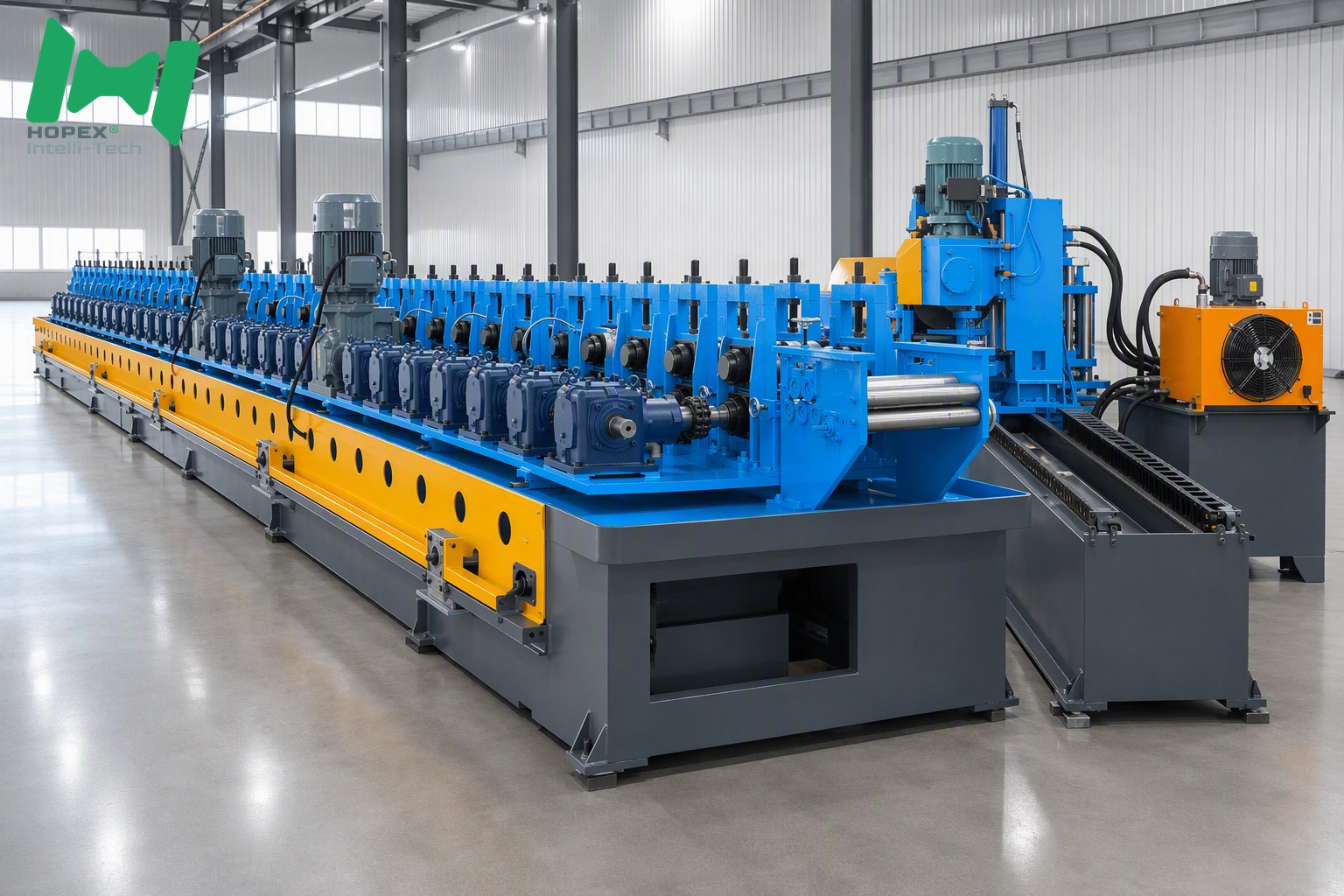
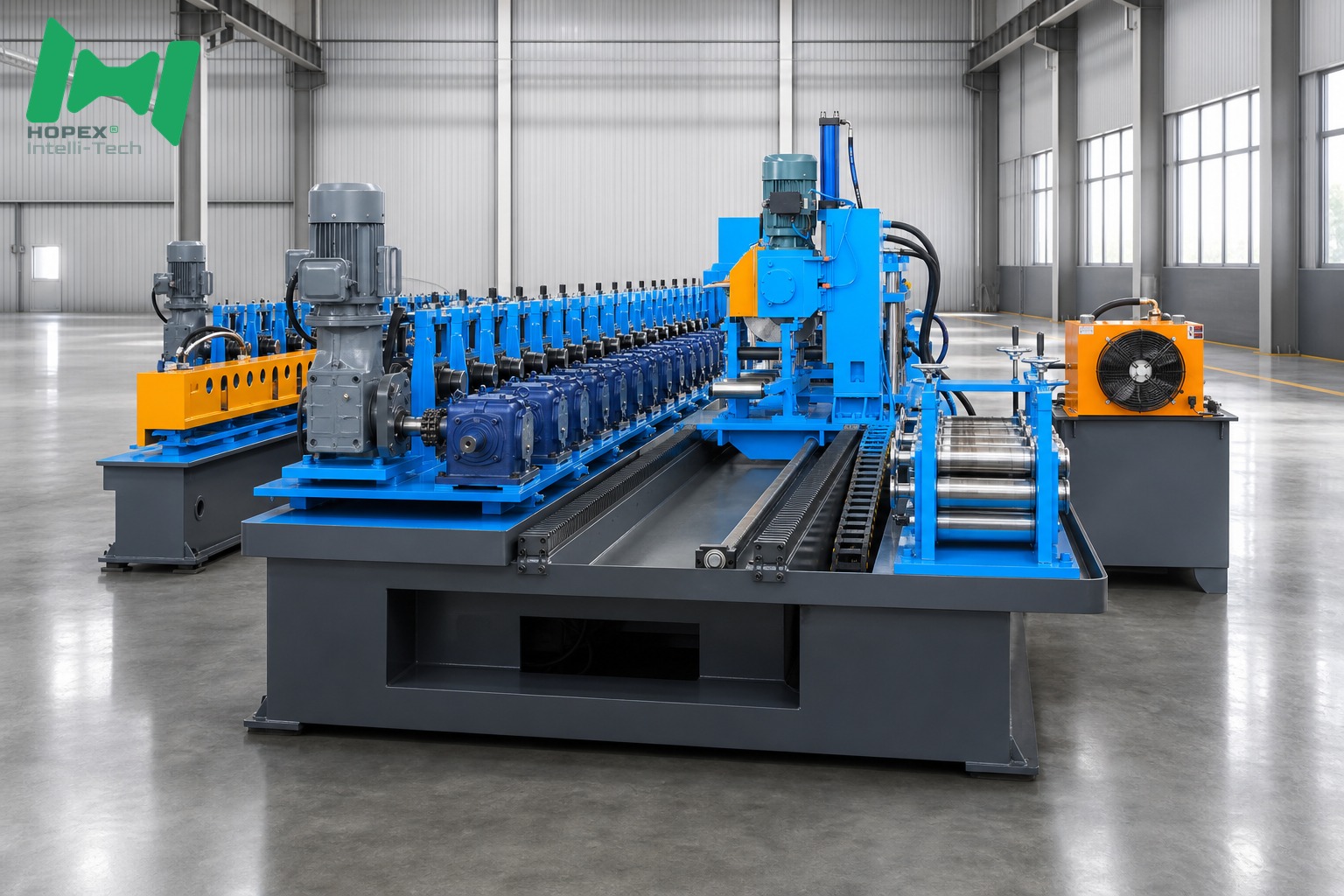
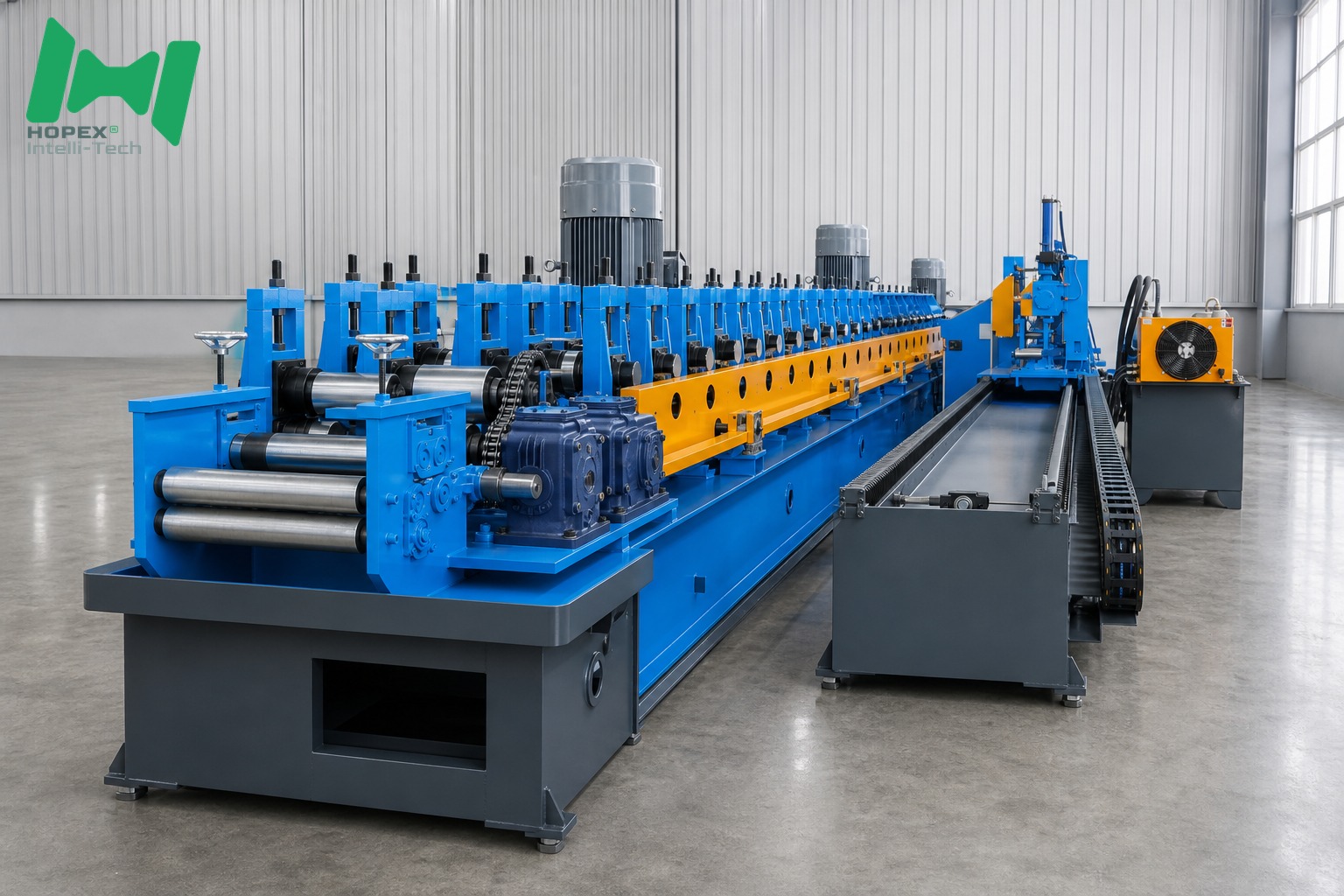
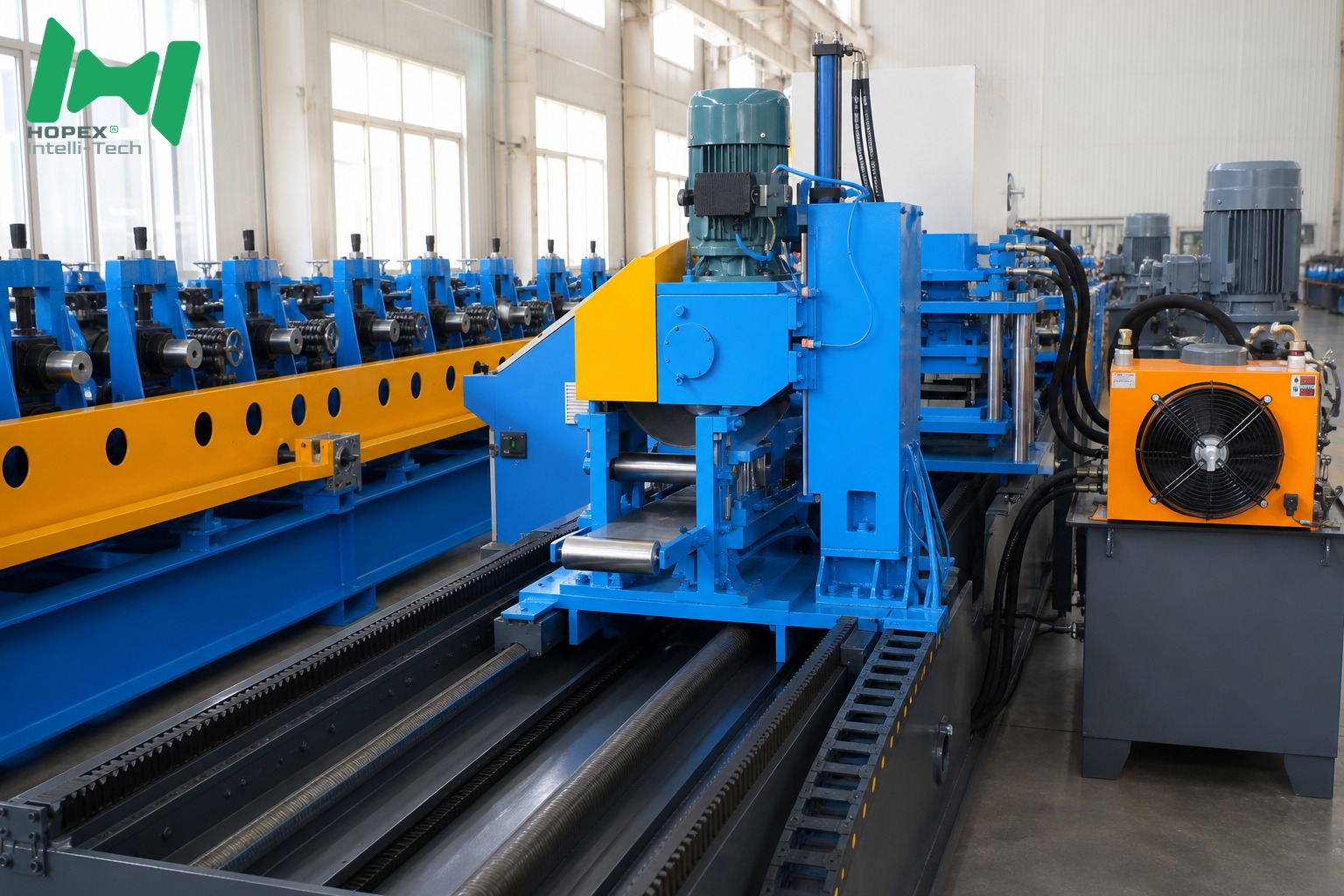
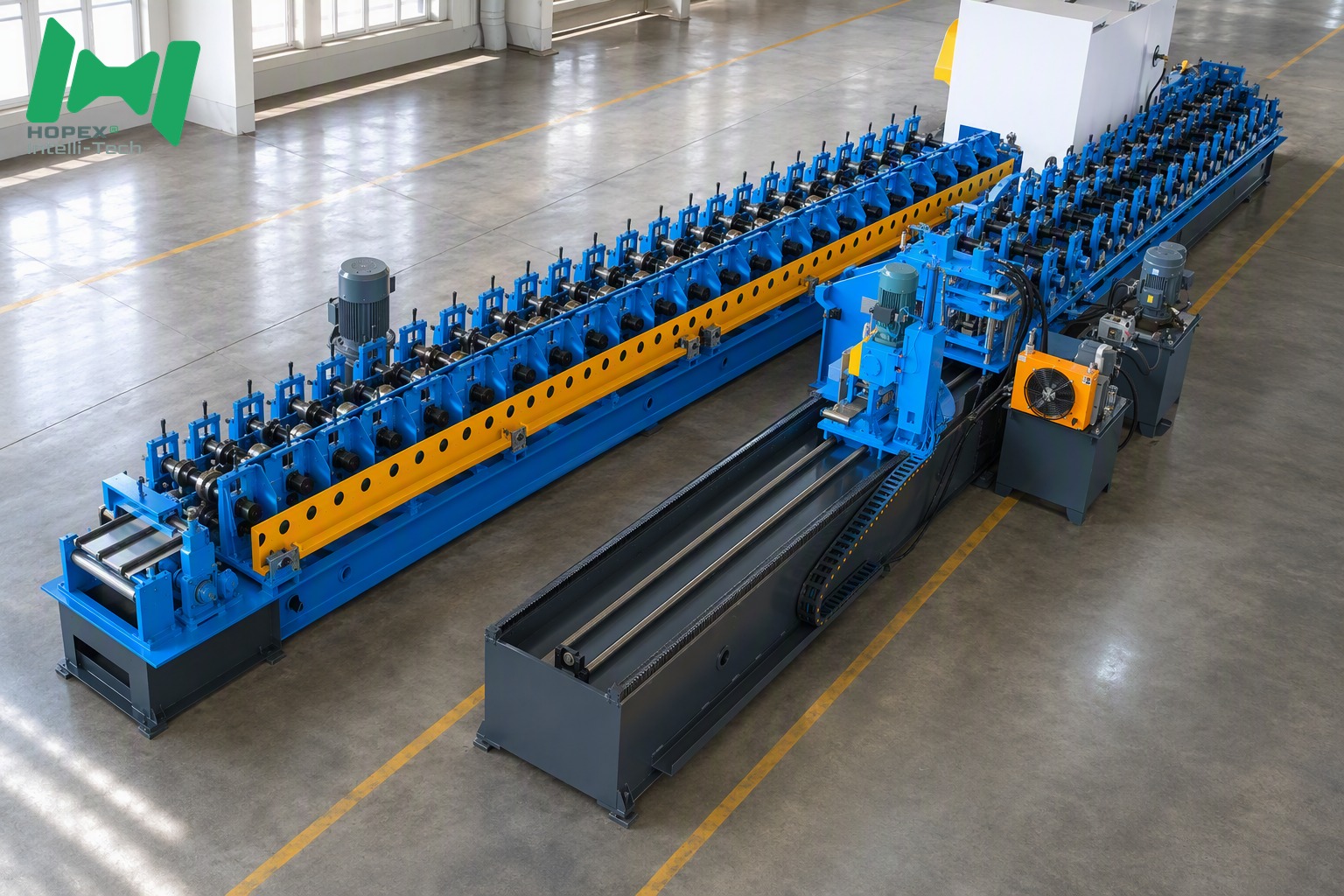
HOPEX-Seismic Bracing Channel
Tooling material decides how long a mill holds tolerance. This page sets out the three material choices behind the seismic bracing channel roll forming machine and what each one is doing.
Cr12 is a high-carbon high-chromium cold work tool steel. It is used here because forming galvanized channel is an abrasive process: the zinc layer and the strip edge work continuously against the roller face.
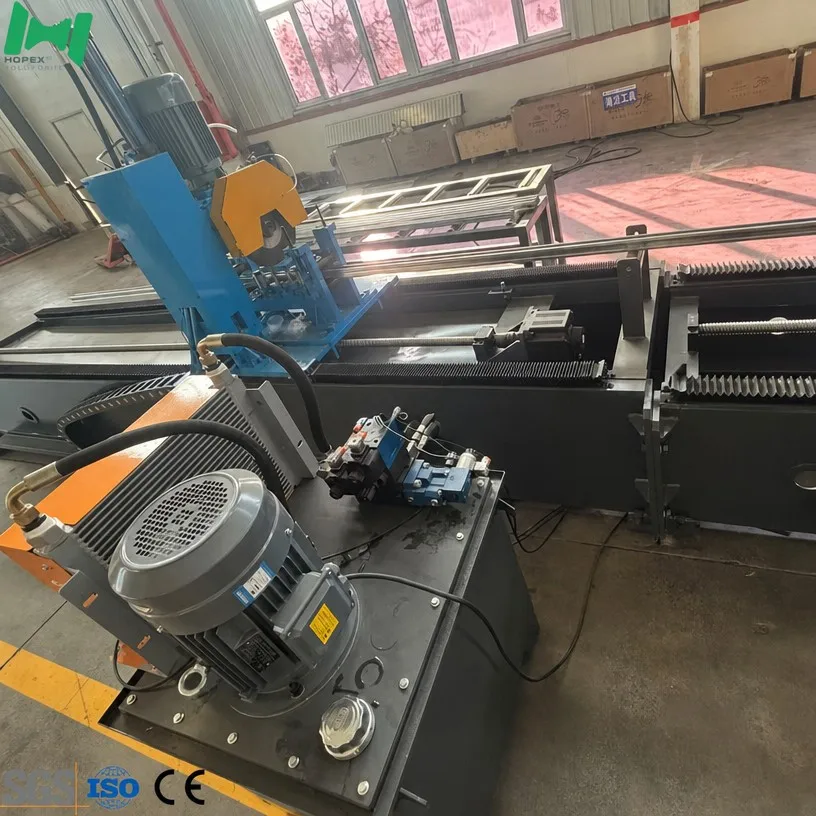
The shaft has a different job from the roller. It does not touch the strip; it resists bending. 40Cr is an alloy structural steel chosen for toughness and fatigue strength rather than surface hardness.
Cutting is where tooling fails first. Cr12MoV adds molybdenum and vanadium to the Cr12 base, giving better toughness at hardness — the combination a cut-off blade needs when it shears 1.5 – 2.5 mm steel repeatedly.
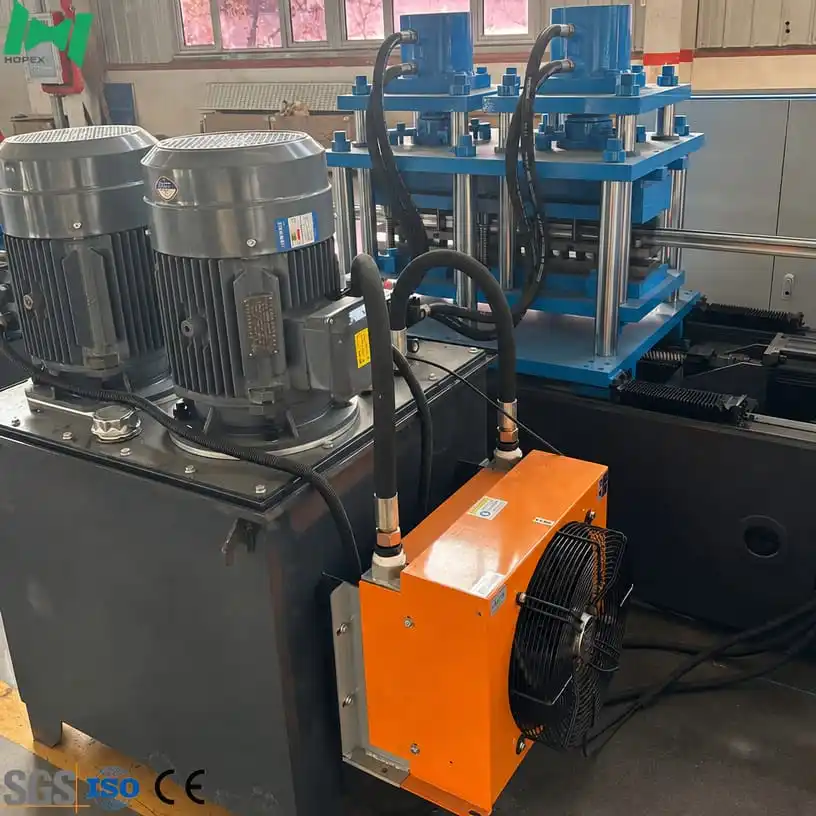
| Component | Material | Dominant failure mode addressed |
|---|---|---|
| Forming rollers | Cr12 | Abrasive wear from galvanized strip |
| Roller shafts | 40Cr | Deflection and fatigue |
| Cut-off blade | Cr12MoV | Edge chipping during shear |
Using one material throughout would compromise at least two of these. Selecting per component is why the line holds section tolerance over a project-length production run.
The mill uses a gearbox and arch frame arrangement. The arch frame carries the roller stands as a single rigid unit, and the gearbox delivers torque evenly so speed does not drop when a heavier gauge enters the mill.
| Item | Parameter |
|---|---|
| Feeding width | 135 / 157 / 177 / 197 mm |
| Rolling thickness | 1.5 – 2.5 mm |
| Roll forming speed | 10 – 15 m/min |
| Roller material | Cr12 |
| Roller shaft material | 40Cr |
| Blade material | Cr12MoV |
| Drive model | Gearbox and arch frame |
| Total power | 69 KW |
| Voltage | 380 V |
| Weight | 20000 kg |
| Package size | 2600 × 300 × 200 cm |
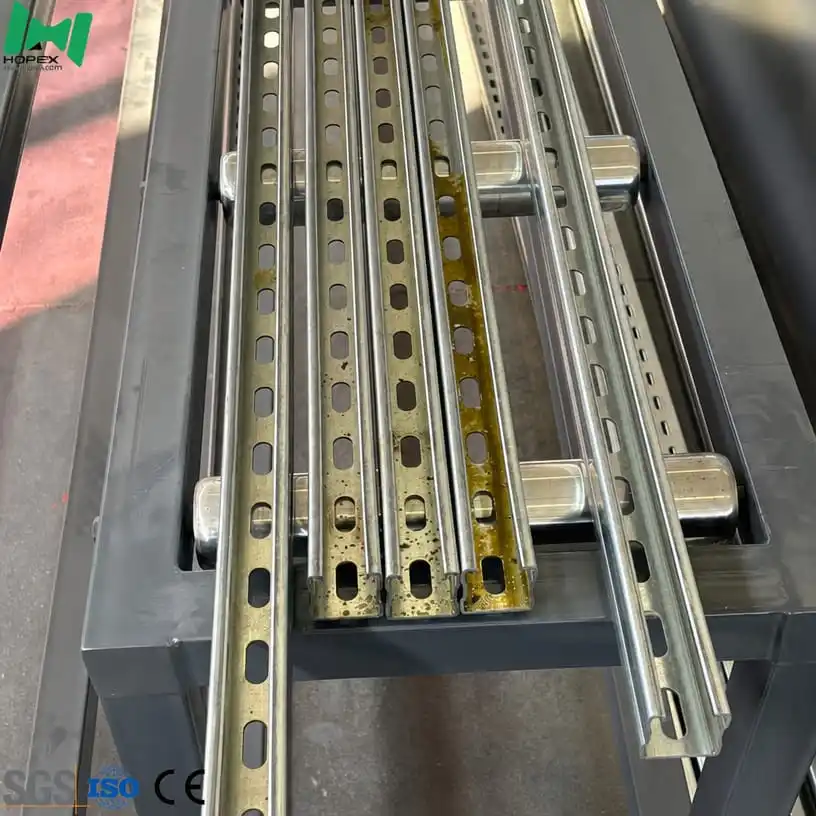
Produced in Tianjin, China with a 2 years warranty covering the core components: pressure vessel, motor, bearing, gearbox, engine, pump and gear.
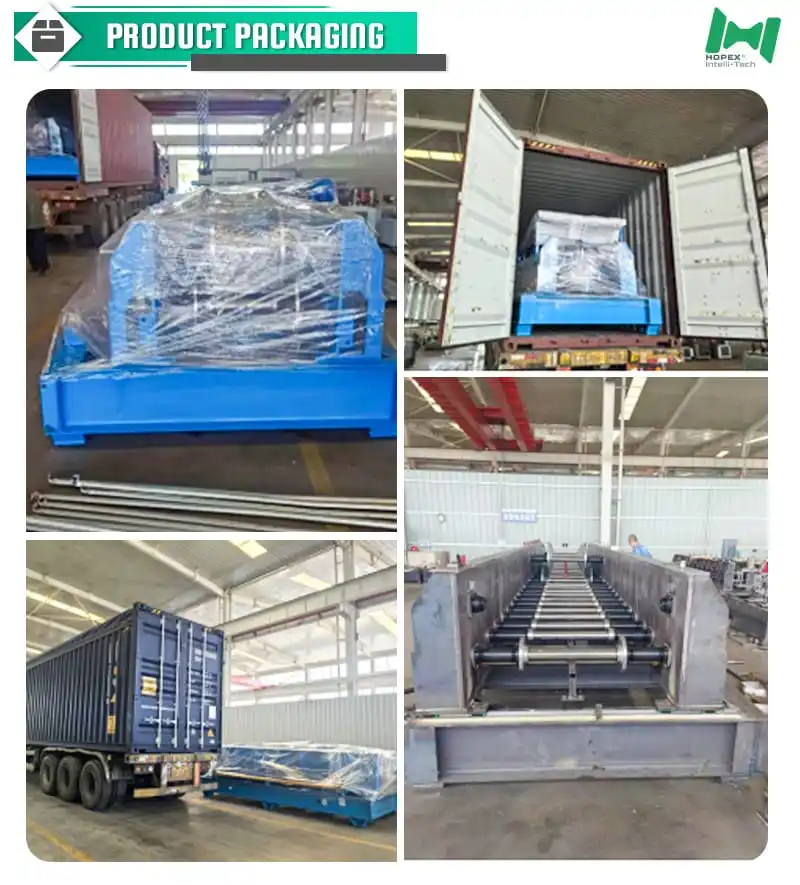
| Item | Detail |
|---|---|
| Package size | 2600 × 300 × 200 cm |
| Gross weight | 20000 kg |
| Lead time, 1 set | 75 days |
| Lead time, 2 – 5 sets | 90 days |
Q1. Why is the roller material different from the shaft material?
They fail differently. The roller faces abrasive wear, the shaft faces deflection and fatigue, so Cr12 and 40Cr are selected respectively.
Q2. Why Cr12MoV only for the blade?
Shearing needs toughness at hardness. The molybdenum and vanadium additions reduce edge chipping compared with plain Cr12.
Q3. How long does a tooling set last?
Life depends on coil quality and running hours. The material selection is made specifically to extend the interval on galvanized strip.
Q4. What thickness does the tooling cover?
1.5 – 2.5 mm.
Q5. What drive arrangement is used?
A gearbox and arch frame design.
Q6. Is the machine covered by warranty?
2 years on core components, with machinery test report and video outgoing-inspection provided.